If you’ve started shopping for a window opener, you’ve likely experienced “price shock.” A quick search reveals everything from $30 basic units to professional systems costing over $500. Why such a huge range? Is the expensive one a rip-off, or is the cheap one a disaster waiting to happen?
This guide breaks down window opener prices, explaining what you get at each price point, the hidden costs of installation, and how to budget for your project.
Quick Overview: Window Opener Price Ranges
Before we dive into the details, here’s a general overview of what you can expect to pay for the hardware itself (excluding installation).
| Price Range | Type | Typical Thrust | Best For | Quality Expectation |
|---|---|---|---|---|
| Entry-Level ($30 – $80) | Basic Chain Actuators | 150N – 250N | Small windows, DIY projects, low usage | Variable; often plastic gears. OK for occasional use. |
| Mid-Range ($80 – $200) | Quality Chain / Small Linear | 250N – 500N | Standard home windows, daily use, smart home integration | Reliable metal gears, better weather sealing, trusted brands. |
| High-End ($200 – $500) | Heavy-Duty Linear / Rack | 500N – 1000N+ | Large windows, skylights, exposed locations, commercial use | Industrial components, high IP ratings, long lifespan. |
| Professional/Commercial ($500+) | Custom / Friction Stay / Certified | 1000N+ | Smoke ventilation systems, architectural projects, historic renovations | Certified compliance (CE, UL), custom finishes, complex integration. |
What Determines the Price of a Window Opener?
Understanding why prices vary helps you decide where to spend your money. Here are the five biggest factors:
1. Material Quality: Plastic vs. Metal Gears
The internal mechanism is the heart of the opener.
- Cheap units often use plastic or powdered metal gears. They are quiet initially but wear down quickly under load.
- Expensive units use machined steel or brass gears. They cost more to manufacture but last for decades and handle stress without stripping.
2. Motor Type and Power
- Standard AC motors are cheaper but offer less control.
- High-quality DC motors provide smoother operation, better speed control, and are often more energy-efficient. Higher thrust ratings (Newtons) require larger, more powerful motors, which cost more.
3. Weather Resistance (IP Rating)
An opener used indoors (IP32) is much cheaper to make than one designed to withstand torrential rain (IP65). High IP ratings require specialized seals, gaskets, and corrosion-resistant materials (like stainless steel).
4. Stroke Length
Longer stroke lengths require longer chains or rods, and often more powerful motors to push the window that extra distance. A 400mm stroke opener will generally cost more than a 200mm version of the same model.
5. Certifications and Compliance
If an opener is certified for Smoke Ventilation (NSHEV) or has passed rigorous safety tests (like UL in the US or CE in Europe), the price increases significantly. This certification proves the device will work in a fire emergency—something cheap units cannot guarantee.
Detailed Price Breakdown by Type
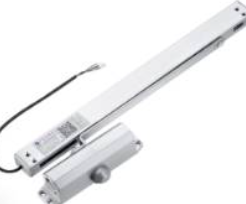
Chain Actuators
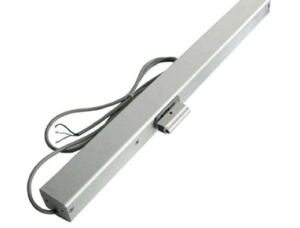
- Price Range: $35 – $180
- What you get:
- *$35-$60:* Basic unit, plastic gears, suitable for a small bathroom window you open once a day.
- *$80-$150:* Brand-name unit (e.g., Somfy, A-OK), metal gears, IP44 weather protection, optional solar panels, and smart home compatibility.
- *$150+:* Silent operation, ultra-long stroke, or special architectural finishes.
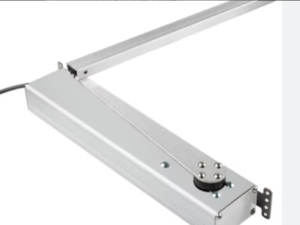
Linear Actuators
- Price Range: $70 – $350
- What you get:
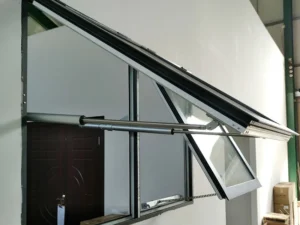
- *$70-$120:* Entry-level industrial style, visible arm, good for workshops or greenhouses.
- *$150-$250:* High-quality domestic linear actuator, smoother design, better weather resistance, suitable for large skylights.
- *$250+:* Heavy-duty industrial grade, stainless steel, 1000N+ thrust, 5-year warranty.
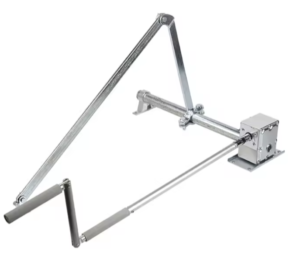
Rack-and-Pinion Actuators
- Price Range: $150 – $500+
- What you get:
- These are rarely “cheap.” Even entry-level rack drives start around $150 because the mechanism is robust.
- High-end models for synchronized smoke vent systems in commercial buildings easily exceed $500 per unit, including control electronics.
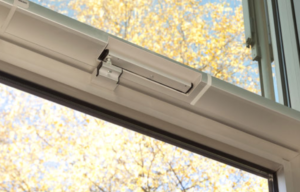
Friction Stay Actuators
- Price Range: $200 – $600+
- What you get:
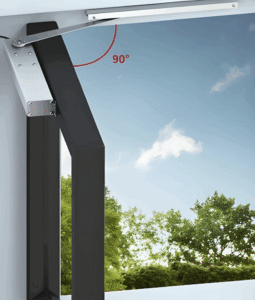
- You are paying for concealment and design. These are complex to engineer and often made to order for specific window profiles. Expect to pay a premium for the “invisible” look.
The Hidden Costs: Beyond the Opener
When budgeting, remember that the opener is just the beginning. You will likely need:
- Power Supplies: A 24V DC transformer. ($15 – $40)
- Controls:
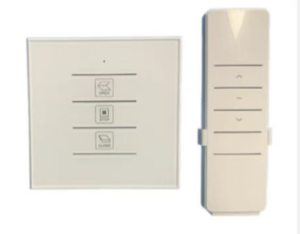
- Simple wall switch: $10 – $20
- Remote control kit: $30 – $70
- WiFi/Smart hub: $50 – $150
- Sensors:
- Rain sensor: $40 – $100
- Wind sensor: $50 – $120 (crucial for skylights!)
- Cabling: If you need to run long cable distances, factor in the cost of 2-core or 4-core low-voltage cable.
- Installation Labor:
- DIY: Free (if you are handy).
- Professional electrician/window installer: $50 – $150 per hour. Automating multiple windows can take several hours.
Example Total Cost:
- Basic Single Window: $60 (opener) + $20 (switch) + $30 (DIY install) = $110
- Professional Smart Home Setup: $150 (opener) + $80 (smart hub) + $60 (rain sensor) + $200 (professional install) = $490
Price vs. Value: When to Splurge and When to Save
It’s OK to Save Money If:
- The window is small and lightweight.
- The window is in a sheltered location (indoors or under a porch).
- It’s for a guest room or infrequently used space.
- You are on a tight budget and handy with DIY repairs.
You Should Invest More If:
- The window is large, heavy, or a skylight (failure could be dangerous).
- The opener is exposed to rain, wind, or coastal salt air.
- The window is part of your fire safety plan (smoke vent).
- You want quiet, reliable operation for years without hassle.
- You are integrating into a smart home system and want guaranteed compatibility.
5 Tips for Getting the Best Price
- Buy Kits: Look for “starter kits” that include the opener, power supply, and a basic remote. This is often cheaper than buying components separately.
- Compare Thrust, Not Just Price: A cheap 150N opener is a waste of money if you need 400N. You’ll just have to buy twice.
- Check for Sales: Major online retailers often have sales on home automation brands during holiday weekends.
- Consider “Last Year’s Model”: Like all tech, when a new model of a popular brand comes out, the previous version often drops in price but remains perfectly functional.
- Get Multiple Quotes: If hiring an installer, get at least three quotes. Be wary of quotes that are significantly lower than others—they may be using inferior hardware.
Conclusion: Budget for Reliability
Ultimately, the price of a window opener reflects its safety, durability, and features. While it’s tempting to buy the cheapest option, remember that a failed opener can leave you with a stuck-open window during a storm or a stuck-closed window on a hot day.
For most homeowners, the mid-range ($80 – $200) per opener offers the best balance of cost and long-term reliability. For specialized or high-risk applications, investing in high-end equipment is not just a luxury—it’s a necessity.